
Table of Contents
- Introduction
- Smart Glass Technologies
- Energy-Efficient Glazing
- Building-Integrated Photovoltaics
- Vacuum Insulated Glass
- Transparent Wood Composites
- Bioinspired Glass Composites
- 3D-Printed Glass Structures
- Conclusion
Glass is a defining element of architectural design, loved for its shape-shifting transparency and seamless connection of indoor and outdoor environments. As technology advances, architects and engineers adopt glass not just for looks, but also for its power to transform building performance, comfort, and sustainability. If you are considering upgrading your commercial facade, you can get a quote for storefront glass repair San Francisco to explore the newest innovations for your project. This article delves into how modern glass applications are setting new standards in contemporary architecture.
From facades that react to sunlight to ultra-efficient insulation panels, cutting-edge glass technologies are helping create buildings that are as intelligent as they are beautiful. These products are at the forefront of contemporary construction, driving green certifications and meeting rising expectations of occupant wellness.
Energy costs are higher than ever, and governments worldwide are enforcing stricter building energy codes. In response, the glass industry is introducing new solutions that combine energy efficiency with aesthetic flexibility. Products like smart glass and transparent wood composites are just the beginning.
Architects striving to design futuristic, efficient, and sustainable buildings are turning to these new glass technologies as key design elements. As a result, the definition of glass in architecture has changed, expanding to include advanced materials and multifunctional solutions.
Smart Glass Technologies
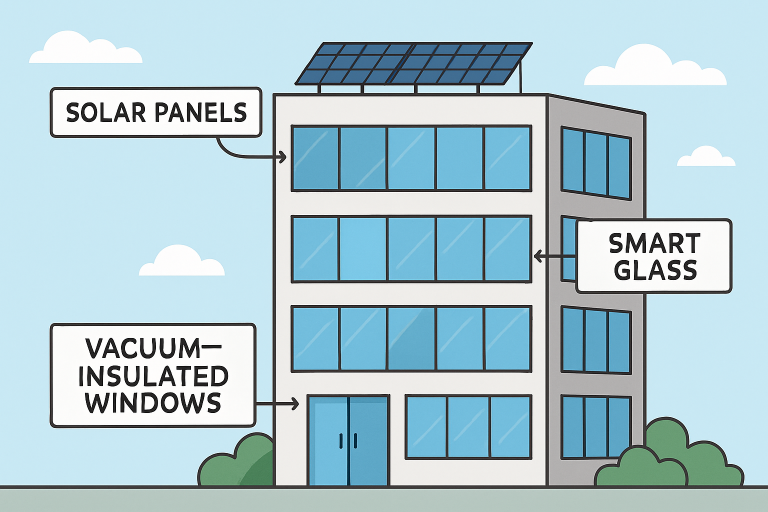
Smart glass, also known as switchable glass, is transforming how buildings interact with their environments. By using electrical, thermal, or even light-based triggers, smart glass can change its appearance and transparency within seconds. For example, electrochromic glass transitions from clear to darkened at the push of a button, minimizing glare and a building’s cooling load during sunny afternoons. In office towers and luxury hotels, this creates environments that automatically balance privacy and daylight, directly enhancing energy savings and the user experience.
Energy-Efficient Glazing
Energy-efficient glazing innovations are revolutionizing modern windows and facades. Technologies such as low-emissivity (Low-E) coatings and triple-glazed insulated glass units provide exceptional thermal control, allowing ample sunlight in while keeping unwanted heat and cold out. Buildings with high-performance glazing systems not only lower operating costs, but also deliver quieter, more comfortable spaces. These technologies are now frequently required to meet stringent sustainability standards like LEED and WELL. Energy-efficient windows are becoming mandatory in new construction thanks to their tangible impact on energy bills.
Building-Integrated Photovoltaics
Building-integrated photovoltaics (BIPV) present an impressive breakthrough in blending renewable energy systems with building aesthetics. By integrating thin-film solar cells directly into glass facades, skylights, and roofs, architects can convert every sun-facing surface into an energy producer. Unlike traditional rooftop panels, BIPV systems are minimally obtrusive, supporting seamless architectural design while contributing to a building’s overall power needs. Recent projects in the United States and Europe, like the American Airlines Arena, exemplify how BIPV technology is helping meet net-zero goals in commercial construction.
Vacuum Insulated Glass
Vacuum-insulated glass (VIG) takes insulation performance to new heights by removing nearly all air between the two panes, creating a vacuum that impedes heat transfer. With insulation values better than triple glazing and far thinner profiles, VIG is popular in projects where energy efficiency and slim aesthetics are desired. In high-rise towers and residential buildings, VIG delivers significant reductions in heating and cooling costs while maximizing daylight and views of cityscapes. The Beijing Tianheng Tower is a prime example where VIG enabled a high-performance curtain wall for year-round occupant comfort.
Transparent Wood Composites
Transparent wood composites are redefining what is possible in sustainable building materials. By chemically treating wood to remove its color-imparting lignin and then reinforcing it with clear polymers, researchers create a material that lets light pass through while remaining tough and shatter-resistant. These composites offer benefits over traditional glass, including improved thermal insulation and break resistance. As production methods become more scalable, transparent wood could soon appear in windows, sunroofs, and even load-bearing architectural elements, merging the warmth of natural materials with the performance of high-tech glass.
Bioinspired Glass Composites
Nature’s ingenuity has inspired a new class of glass composites. By mimicking structures like mother-of-pearl (nacre), scientists have developed bioinspired composites consisting of layered glass flakes bound with tough polymers. These materials are not only highly transparent but also significantly more fracture-resistant than traditional glass. Applications range from impact-resistant safety windows to architectural panels in public spaces where both visual clarity and durability are critical.
3D-Printed Glass Structures
Additive manufacturing has unlocked new design opportunities in glass architecture. 3D printing techniques enable intricate shapes and microstructures that were previously impossible to achieve with traditional fabrication methods. Using technology like Transparency-on-Demand Glass Additive Manufacturing, designers can produce glass components with customized levels of transparency, opening the door to new applications in advanced optics and functional architectural features.
Conclusion
The rapid evolution of glass technology is reshaping the world of architecture. New solutions, such as smart glass, vacuum-insulated units, and renewable-energy-generating panels, are turning ordinary buildings into energy-efficient works of art. As architects adopt these cutting-edge materials, the future skyline will not only look more striking but will perform better in every way, from energy usage to occupant well-being. Continued advancements will ensure that glass remains at the center of sustainable, innovative building design for years to come.


More Stories
The Rewards of Reliability: Why Choosing the Right Vehicle Matters
How Businesses Can Benefit from Self-Storage Solutions
The Benefits and Challenges of Pre-Employment Drug Testing